Monthly Archives: September 2025

Truth About Blue Light

Is all blue light harmful? No, blue light is naturally occurring part of our atmosphere and we actually need a certain amount for optimal health and development.

Is all blue light healthy? No, indoor artificial blue light that is admitted from fluorescent/LED lighting and lighted T.V., tablets and hand held device screens has long been known to cause vision fatigue in people of all ages. Further studies are required to understand the full impact on retinal health.

Why does it cause vision fatigue? Blue light in the light spectrum causes haze in the atmosphere. When you are looking at a lighted device it is difficult work for your eyes to hold focus on any object inside your arms reach for long periods of time.

How do blue light inhibiting lenses help? A good quality blue inhibiting lens will reduce the amount of blue light visible to your eye, thereby increasing contrast and making it easier for your eye to create sharp focus for longer periods of time.

Are all blue inhibiting lenses equally effective? Not every pair of glasses labeled blue-inhibitor is fully effective because they do not filter enough blue light to make a difference in vision comfort. The percentage of blue light or High Energy Visible light that is filtered is what determines full effectiveness. Ask your optician for suggestions.
How to Sterilize Your Specs

All day long we are reminded not to touch our faces, eyes, nose or mouth for fear of picking up unwanted bacteria or a virus. Even when the world is not in mid-pandemic mode, your eyeglasses have to be cleaned just like you have to wash your hands to stay sanitary. However, during this pandemic it is of utmost importance that you clean you glasses when you come in from public spaces and that you not use your dry cloth on your lenses until your eyeglasses have been sanitized properly.

There is no need for special spray or antibacterial wipes to accomplish a good clean. When basic soap like dawn dish soap is available, that will serve you fine. Any dish or hand soap that is sans aloe or lotions will clean most eyeglass materials and lenses too, without harm. I encourage you to consider how often you touch your eyeglasses through the day. Even when your eyeglasses fit you well, it is not uncommon to develop a habit of touching them, lifting them off your nose briefly, and there are those of you who even choose to push them up on top of your head. You’ll get no lecture from me about any of these habits as I possess all of them myself. However, it does mean that now, more than ever it is important to keep your eyeglasses as clean as you are keeping your hands.

Step one: wet your frame and lenses (as long as it is not wood or other delicate, porous materials)

Step two: put a dot of dish soap (without aloe or lotion) on your index finger and rub it with your thumb until lightly sudsy

Step three: rub your thumb and forefinger over the lenses and temples (arms) and rinse clean under running water

Step four: dry your eyeglasses thoroughly. Any low lint paper product that feels soft to the touch and without grit may be used, though ideally you would use your polishing cloth given with your eyeglass purchase. You don’t want water trapped in nose pads or between the lens and frame to turn your eyeglasses green so dry thoroughly. If you choose to blow dry your eyeglasses do so on low or no heat and never high heat (this can cause damage to frame or lenses).

Extra deep clean tip: sometimes you get grime caught in places that are hard to clear. Use a baby soft toothbrush to clean nose pads and lens grooves when needed.


What color sun lens do I need?

How do I choose the right sunglass lens?

I find it fascinating that people will actually buy glasses from big box stores or on the world wide web without really understanding their own needs. When I take care of clients in my shop, I take the time to interview them about their needs and interests in regards to how they task their eyes. When buying sunglasses it is important to understand the primary or most important task you will be performing in them and then purchase a product that is tailored to your unique activities and lifestyle.

The Basics: Choose a color.

  • Brown or Amber: High contrast, reduces haze caused by blue light, good in most lighting conditions, provides brighter, sharper definition, good for distance driving, trail rides and walks. Provides stable focus in environments with changing lighting conditions. Also useful in Golf and Tennis or Shooting for the increased contrast and clarity against green backdrops.
  • Green or G-15: These lenses provide good color contrast and increased clarity in most lighting conditions. Green or G-15 sunglass lenses are most often used in military sunwear on the ground and in the air as well as for riding road bikes and motorcycles. The Grey-green quality of the lens inhibits some blue light while providing better color definition than a brown or amber lens, making it an ideal color choice for pilots.
  • True Grey: Grey lenses provide 85% or more visible light protection and tend to feel darker in most lighting conditions. Grey lenses are good on open water, high altitude sports like skiing or sky diving and are the best choice for people who are light sensitive. This lens color provides true color definition and strong light protection. This is the lens of choice for most beach combers and outdoor enthusiasts needing maximum light protection. Warning: this sun lens can feel too dark inside the cabin of your car if you are not light sensitive.

Polarized or Not?

Polarized sun lenses have become increasingly popular over the last 30 years. Originally developed for fishermen, polarized lenses provide exceptional lens clarity in all lighting conditions. Polarized lenses are often used in driving lenses to take the glare off the glass shields of the cars, and in boating lenses to take the light glare off the water. Polarized lenses are NOT used in the cockpit of an airplane because it darkens the aircraft’s polarized instrument panels. It is incredible the vision quality difference between custom made lenses and mass produced commercial lenses. However, even good quality lenses chosen in the wrong format for the wrong activities will not give you the user experience you were seeking.

What about UVA/UVB protection?

Your lens color does NOT provide UV or Infrared light protection. Your lens material and separate filters are used to create invisible light protection against UVA and UVB rays. It is a common misconception that the darker your lens the more UV protection but that is simply not true. UV light penetrates surfaces and requires a special lens filter or material to inhibit it fully. Always seek full spectrum UV protection from your sunglass and do not trust that your store bought specials have full protection even if they are marked UV. More on this in another blog/vlog to come.

High quality ophthalmic lenses make a difference. Mass produced lenses do not hold the quality of the optics throughout the lens. Consequently you are building eye-fatigue while wearing them. Instead of choosing your sunglass lens color based on the color of your frame, consider working with an optician to provide council on best lens choice for your lifestyle and perhaps even custom make your sunglass lenses.

Whether you wear a prescription or you just need non-prescription sun protection, consider having your sunglass lenses custom made. Your eyes will thank you and your future self will appreciate better optical health too.


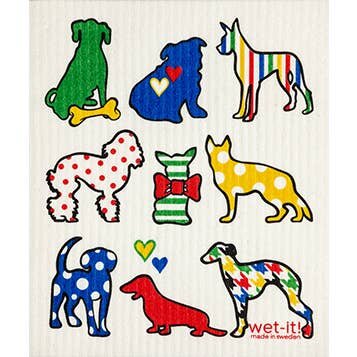
What is Swedish Cloth and Why Own One?

Why would I ask for a biodegradable washcloth for Mother’s Day?

It’s my new favorite thing! In fact, it has saved me on paper towel use in my kitchen and provided me a sanitary way to keep counter tops germ free.

I love these crazy things so much I brought them into the shop and gifted them to clients with every Mother’s Day purchase this year.

These multi-use, assorted prints, hypoallergenic, thick Swedish Cloths are odor resistant, biodegradable, dishwasher safe, highly absorbent, scrubby when dry and sponge-like when wet. Perfect in the bathroom as reusable facecloths or to clean the sinks, counters and mirrors and are excellent in the kitchen for drying and cleaning almost EVERYTHING.

What makes these cloths so impressive is their absorption and bio-degradable qualities. The fabric is a tried and true Swedish invention from the 1940s and is made of a perfect blend of high grade cotton and wood pulp. They are durable and dishwasher safe and hold up like a dream. This helps reduce paper towel use and waste. These are literally better than a reusable paper towel and far outperforms any sponges, paper towels or microfiber cloths because they are efficient, resusable, eco-friendly, 100% biodegradable and crazy fun and stylish! They simply make you happy in your task.

This is just one of the cool things Club Eyetopians will be enjoying very soon. Approximately 8×7 $5.99 per towel.


Using UV Light as Disinfectant

What is UV Radiation and how can it be harmful or helpful?

As opticians it is our job to understand the light spectrum and how light directly impacts your ocular health. UV light or UV radiation as it is more properly termed is invisible to the human eye. Our primary source of UV radiation on earth is the sun. Just as we use invisible sunscreen on our skin to protect our tissue layers from damage, so too the eyes must be protected.

UV radiation is a type of EM (electromagnetic) energy measured on the EM spectrum and the entire light spectrum is measured in nano-meters or wavelengths. More precisely, UV is the portion of the EM spectrum that falls between X-rays and visible light.

What are the primary types of UV radiation?

The sun produces three main types of UV rays (the fourth, UVV is not part of this discussion):

UVA (315 nm to 400 nm)

  • UVA rays have a longer wavelength that can penetrate the middle layer of your skin (the dermis)

UVB (280 nm to 315 nm)

  • UVB rays have a short wavelength that reaches the outer layer of your skin (the epidermis)

UVC (200 nm to 280 nm) 

UVA and UVB rays are the longest wavelengths and are the part of the spectrum that we filter in sunglasses to protect your eyes and in suntan lotion to protect your skin. The UVC from the sun has the shortest wavelengths and is completely absorbed by our atmosphere and never reaches deep enough into our environment to cause us harm.

When did we begin to harness UVC for disinfection?

UVC has been artificially created by man for a series of applied purposes over the years. UVC light in the form of germicidal lampshas been in use since the late 1800s to kill microorganisms such as bacteria, mold, yeast and viruses. Niels Ryberg Finsen (1860-1904) was the first to employ UV rays in treating disease and was awarded the Nobel Prize for Medicine in 1903. After World War II, UVC was used for sterilizing air in hospitals, kitchens, meat storage and processing plants, bakeries, breweries, dairies, beverage production, pharmaceutical plants and labs – anywhere microbiological contamination was a concern. In the 1950s UVC was harnessed inside air handling units to “cleanse the air” and UVC played a major role in helping control the spread of tuberculosis (TB). Additionally, UVC light has been used in water sanitation treatment since the early 1900s.

UVC light today is created through UVC LEDs and has been marketed and sold for commercial and private use. Today UVC LEDs are used for a variety of disinfecting purposes. Travel sized UVC lights have been sold by travel companies for many years as a means for frequent travelers to “sanitize” bed sheets and counter tops in hotel rooms, apartments and rental homes.

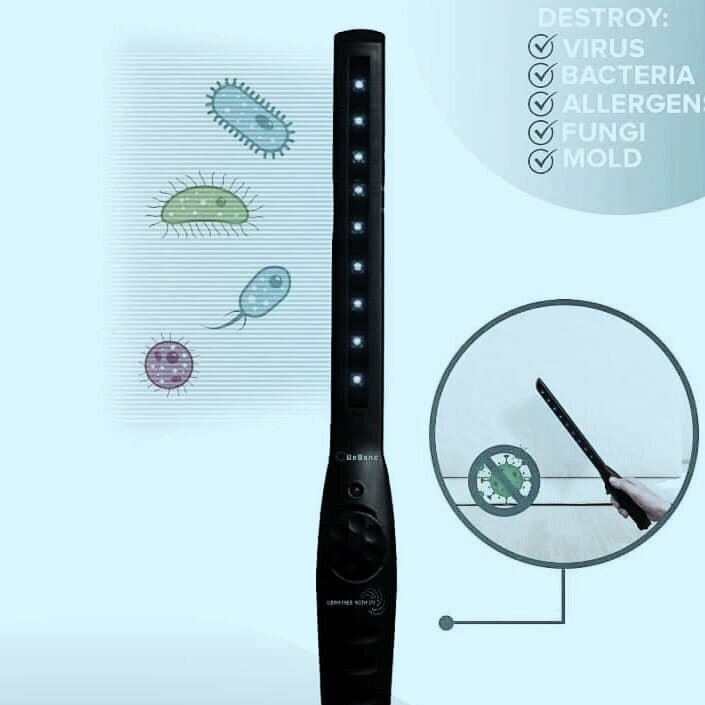
UVC wands and lamps of many varieties have become available to the public and are in demand as a direct result of highly transmissible colds and viruses like the “common cold,” a variety of dangerous seasonal flu strains, SARS, H1N1, and COVID-19 just to name a few. UVC lamps have become common again in commercial spaces like mass transit, commercial kitchens, cafeterias, food storage, processing plants, and high traffic, small and large businesses across all industry much like it was employed in WWII. Note, FDA does not approve of UVC disinfection for CPAP machines.

What’s the danger?

UVC is radiation energy that can produce ozone. Ozone is UVV and in high doses can be harmful to living cells, including lung tissue in people, pets, and plants. UVC lights used over extended periods can create O3 or ozone and rooms should be ventilated for a full 20-30 minutes after use to prevent human or pet airway irritation or cell damage.

What’s the conclusion?

In short, UVC lamps have been in use and FDA approved for many years. The safety of UVC lights as short burst disinfecting tools only comes into question when used improperly. Handheld UVC wands should not be looked into directly as this will cause corneal damage and should not be used on human skin or other living tissue on children, pets or plants. The commercial application for disinfecting high traffic businesses, bed sheets and pillows, face masks, and high touch point items is extremely beneficial particularly in this new era of pandemic viruses.


Privacy Settings
We use cookies to enhance your experience while using our website. If you are using our Services via a browser you can restrict, block or remove cookies through your web browser settings. We also use content and scripts from third parties that may use tracking technologies. You can selectively provide your consent below to allow such third party embeds. For complete information about the cookies we use, data we collect and how we process them, please check our Privacy Policy
Youtube
Consent to display content from - Youtube
Vimeo
Consent to display content from - Vimeo
Google Maps
Consent to display content from - Google